Young's Modulus Apparatus (Vernier Type)
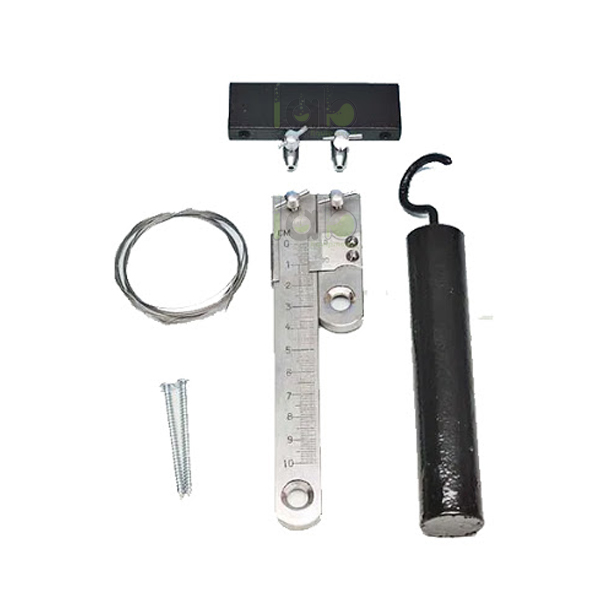
Product Code : EL-EAST-10412
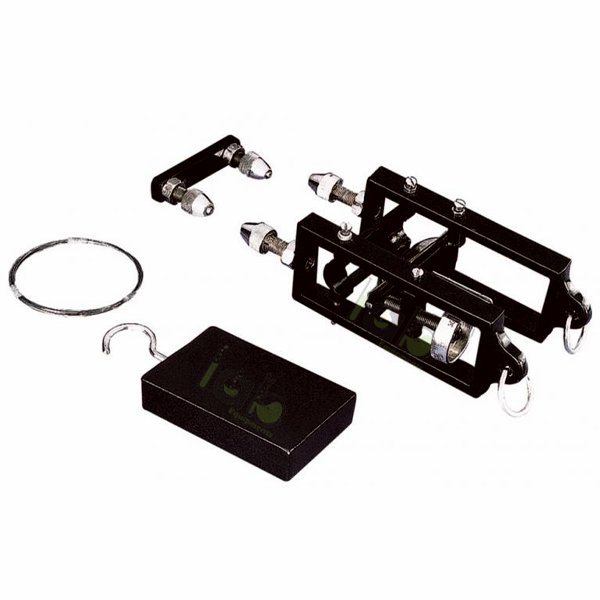
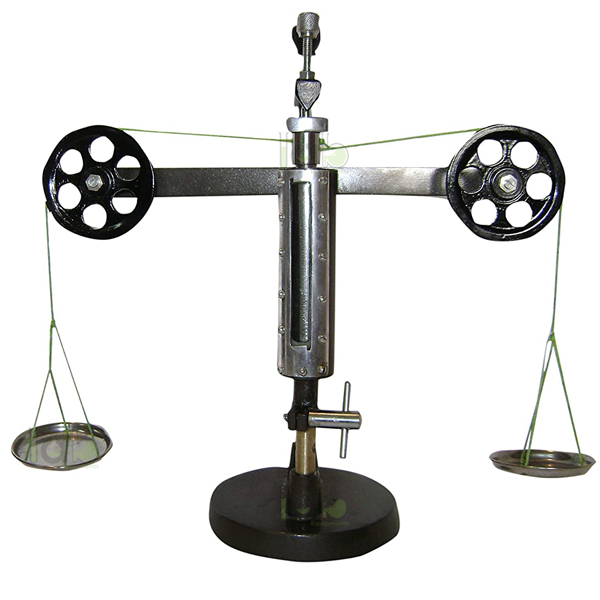
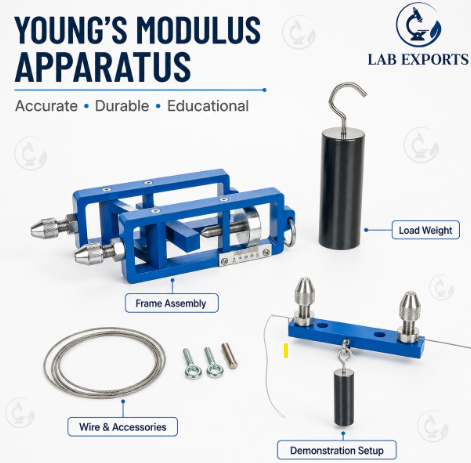
This vernier type apparatus measures how far a loaded wire stretches, so that the Young's modulus of its material can be worked out. The stretch is read on a 10 cm brass scale with a sliding vernier that reads to 0.1 mm. It comes complete in a case with two matched steel wires, a ceiling attachment and a constant cast iron weight.
Specifications of the vernier Young's modulus apparatus
| Component | Specification |
|---|---|
| Method | Vernier type, two wires side by side |
| Main scale | Brass, 10 cm (100 mm) long, fixed to the reference wire |
| Vernier | Sliding, on the specimen wire, reads to 0.1 mm |
| Wires | Two matched drawn-steel wires, specimen and reference, about 2 m long and 0.50 mm nominal diameter, with extra length for the clamps |
| Suspension | Ceiling attachment |
| Constant weight | Cast iron, keeps the reference wire under constant tension |
| Loading pack, separate | 100 g hanger and nine 100 g slotted discs, 1 kg in total at full load |
| Supplied as | Complete in a case |
| House code | EL-EAST-10412 |
| Manufacturer | Lab Exports, Delhi |
Practicals on the vernier Young's modulus apparatus
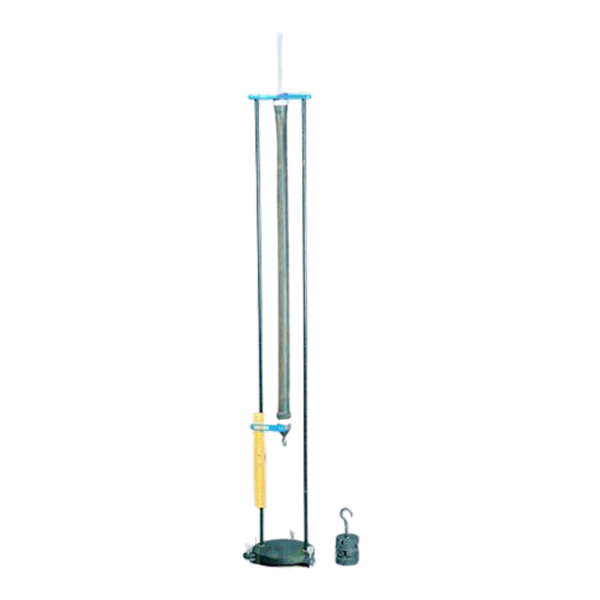
Both wires hang from the ceiling attachment. The reference wire carries the fixed main scale and the constant cast iron weight. The specimen wire carries the vernier and the load. As load is added, the specimen wire stretches and the vernier slides past the main scale. The change from the starting reading is the extension l.
- Young's modulus of the supplied wire. Measure the free length L of the specimen wire between the clamps. Read its diameter at several points with a screw gauge and take the mean; the nominal value is 0.50 mm. Hang the 100 g hanger on, take the starting reading, then add the 100 g discs one at a time and note l for each load. Work out Y = MgL/(πr2l). In this formula M is the added mass in kg, g is the acceleration due to gravity and r is half the mean diameter.
- Stress against strain graph. For each load, find the stress Mg/(πr2) and the strain l/L. Plot stress on the vertical axis and strain on the horizontal axis. Inside the elastic limit the points fall on a straight line through the origin, and its slope is Young's modulus.
- Checking for a permanent set. Take the masses off in the same steps and read the vernier each time. If the wire returns to its starting reading, it was not stretched past its elastic limit. If it does not, fit a new specimen cut from steel wire before the next class.
Reading the vernier scale
- Find the least count. It is the value of one main scale division divided by the number of vernier divisions, and on this apparatus it is 0.1 mm.
- With the empty 100 g hanger on the specimen wire, note the last main scale mark passed by the vernier zero.
- Find the vernier mark that lines up exactly with a main scale mark. Multiply its number by 0.1 mm and add the result to the main scale reading.
- Read again after each load. The extension is the new total reading minus the starting reading.
Frequently Asked Questions
What is the least count of the vernier on this apparatus?
It is 0.1 mm, so each extension is read to the nearest tenth of a millimetre. It equals the difference between one main scale division and one vernier division.
What is the elastic limit, and how is it different from the yield point?
The elastic limit is the greatest stress a wire can take and still return to its first length when the load is removed. At the yield point, which comes at or just after it, the wire starts to flow and stretches a lot for little extra load. Keep every load well below both. The safe load also depends on the wire grade, the clamps and the ceiling mounting.
Why should you wait after adding or removing a weight before reading?
The wire does not reach its full extension at once, and the hanger may still be swinging. Give it a short time to settle so the vernier shows the steady extension. Adding and removing the weights gently helps for the same reason.
What are the main sources of error in the vernier method?
Slotted weights may not have exactly their marked mass, and the wire may not have the same cross-section all along its length. Misreading the vernier and loading the wire past its elastic limit also spoil the result.
What is Young's modulus used for?
It tells you how stiff a material is when it is pulled. Engineers use it to work out how far a wire, cable, rod or beam will stretch or bend under a load. It also helps them pick a material that will not stretch too much in use.
Wires and apparatus for stretching tests
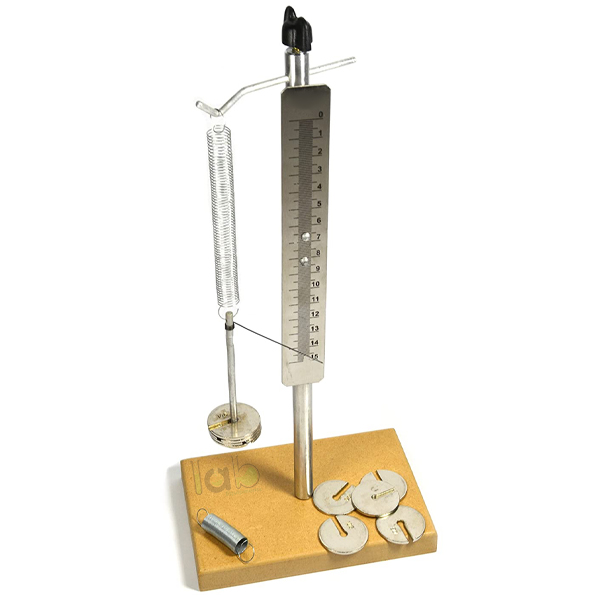
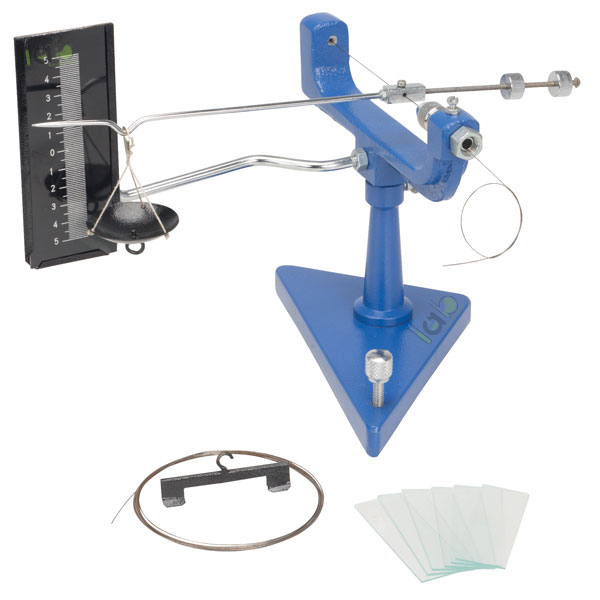
- Young's Modulus Apparatus (Searle's Pattern)
- Hooke's Law Apparatus
- Steel Wire (100gm)
- Brass Wire (100 gm)
More apparatus is in the Elasticity and Surface Tension section of the Physics Lab range.
To enquire, email [email protected] with the house code EL-EAST-10412 and the quantity, or use the Add To Cart button on this page.
Last updated: 23 November 2026