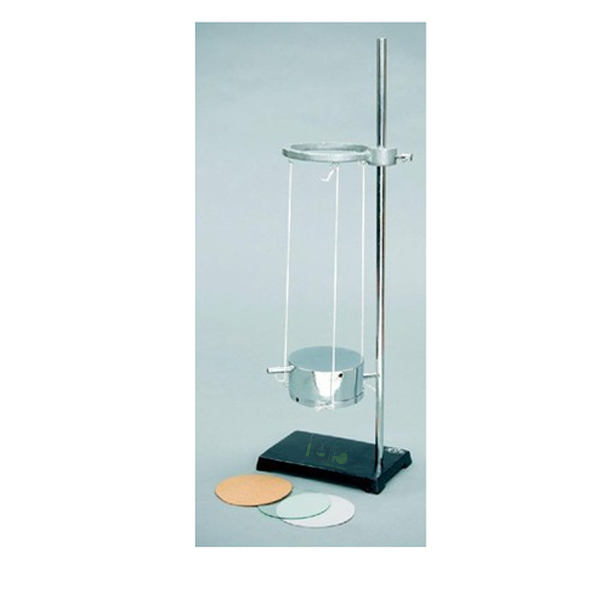
Constant Level Tank

Product Code : EL-H-10403
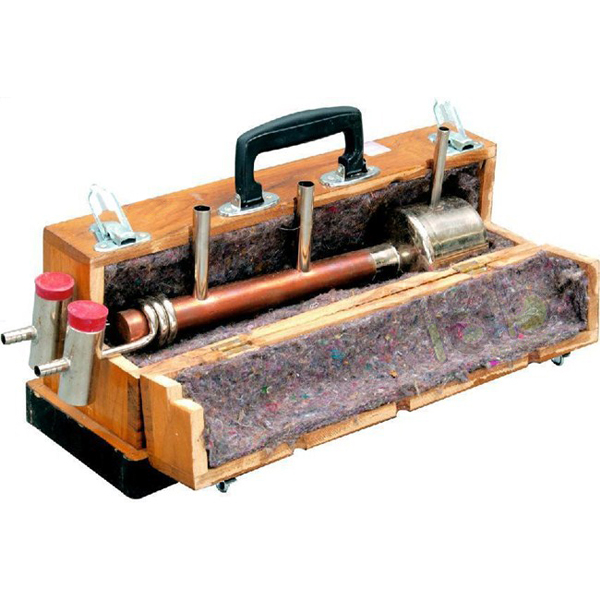
This constant level tank, also called a constant head tank, feeds water to flow experiments at a rate that does not drift. Water is let in a little faster than it is drawn off, and the surplus spills down a central overflow tube. The copper vessel measures 100 × 75 mm and has separate inlet, outlet and overflow tubes.
Specifications of the constant level tank
| Component | Specification |
|---|---|
| Vessel | Copper |
| Size | 100 × 75 mm diameter |
| Tubes | Water inlet, outlet and overflow |
| Level control | Central overflow tube fixes the maximum water level |
| Function | Keeps a constant water level and a steady outlet flow, whatever the pressure changes in the supply line |
| House code | EL-H-10403 |
| Manufacturer | Lab Exports, Delhi |
Flow experiments fed from the tank
Mains or overhead-tank pressure rises and falls during a practical. The tank sits between the supply and the experiment, so the apparatus sees only the fixed head of water above the outlet.
- Setting up the supply. Mount the tank above the apparatus it will feed. Join the supply to the inlet, the outlet to the experiment and the overflow tube to a drain, using Rubber Tubing. Open the supply until water just runs from the overflow, then set the outlet flow.
- Cooling water for steady-state conduction. Feed the spiral cooling tube of Searle's Thermal Conductivity Apparatus from the outlet. A steady flow lets the inlet and outlet water temperatures settle to fixed values.
- Checking that the flow is steady. Catch several samples of the outflow, each over the same interval on an Analog Stop Clock. If the samples weigh the same on a Physical Balance, the head is holding constant.
- Continuous-flow calorimetry. Methods such as Callendar and Barnes pass water past a heater at a fixed rate, so the inlet and outlet temperatures stay steady while readings are taken.
Documentation and supply
Most Lab Exports products carry a one-year manufacturer warranty.
Lab Exports manufactures the Constant Level Tank at its works in Laxmi Nagar, Delhi, and supplies it to schools, colleges and universities in India and 60+ countries, handling the export documents for each shipment. More about the company is on the About Lab Exports page.
Frequently Asked Questions
How does the overflow tube keep the flow from the tank steady?
It fixes the height of the water surface. Water is fed in slightly faster than it leaves, and the extra runs away down the central overflow tube. The level, and so the pressure head on the outlet, stays the same, so the outlet flow does not follow changes in the supply.
What should be checked before ordering a constant level tank?
Check the vessel material, its size, the tubes and the mounting parts. This tank is copper, 100 × 75 mm, with inlet, outlet and overflow tubes. A stand, clamp and tubing are not listed in its description, so name any that you need in the enquiry.
Why does the outlet flow depend on the height of water in the tank?
The speed of water leaving an outlet depends on the head, the height of the water surface above it. If the level rises or falls, the flow rate changes with it. Holding the surface at the overflow height keeps the head, and so the flow, constant.
Why must the cooling water flow at a steady rate in Searle's experiment?
The heat carried away each second is worked out from the water flow and its temperature rise. If the flow drifts, the outlet temperature keeps changing and steady state is never reached. A steady flow lets all the thermometer readings settle.
Apparatus and tubing used with this tank
More apparatus is in the Heat section of the Physics Lab range.
To enquire, email [email protected] with the house code EL-H-10403 and the quantity, or use the Add To Cart button on this page. Tender buyers can also see the Tenders and OEM page.
Last updated: 24 November 2026