Linear Expansion Apparatus
Product Code : EL-H-10398
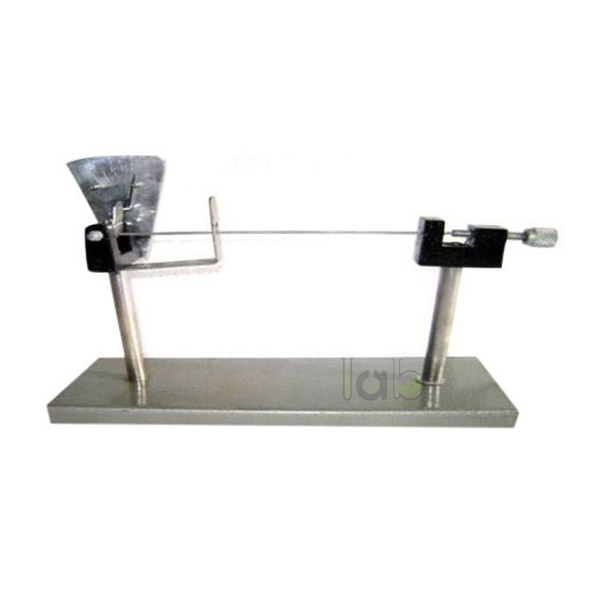
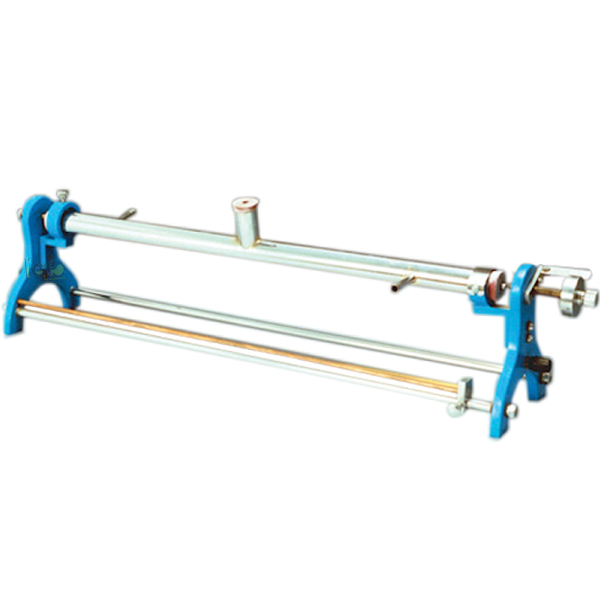
The linear expansion apparatus measures the increase in length of a metal rod heated by steam. The rod lies inside a steam chamber, and an indicator mounted at one end registers the expansion. The heat jacket has three tubes, for steam intake, steam outlet and a thermometer. Steam comes from a separate source.
Specifications of the linear expansion apparatus
| Component | Specification |
|---|---|
| Heating | Steam chamber (heat jacket) around the metal rod |
| Readout | Expansion indicator mounted at one end of the rod |
| Jacket tubes | Three: steam intake, steam outlet and thermometer insertion |
| Steam source | Not included |
| Supplied with | Installation instructions and a manual |
| House code | EL-H-10398 |
| Manufacturer | Lab Exports, Delhi |
Finding the coefficient of linear expansion
The coefficient of linear expansion, or linear expansivity, is α = ΔL / (L × ΔT). Here L is the length of the rod at room temperature, ΔL its increase in length and ΔT the rise in temperature. Steam keeps the whole rod near the boiling point of water while the indicator shows ΔL.
- Measure the length L of the cold rod and note the room temperature.
- Place the rod in the steam chamber and set the indicator to its starting reading.
- Fit a thermometer in the thermometer tube. Join the steam intake to a boiler heated on a Bunsen burner with Rubber Tubing, and lead the outlet tube to a drain.
- Pass steam until the thermometer and the indicator both stay steady, then record the final temperature and ΔL.
- Shut off the steam and watch the indicator return as the rod cools and contracts.
If rods of other metals are available, testing them in the same way shows that each metal has its own value of α. A quick comparison of several metals side by side can first be shown on the Pyrometer.
Frequently Asked Questions
What are the main parts of a linear expansion apparatus?
The main parts are a steam jacket around the test rod and an indicator or gauge at one end to read the small change in length. A thermometer port and a steam supply complete it. On this apparatus the jacket has intake, outlet and thermometer tubes, and the steam source is not included.
What is a linear expansion apparatus used for?
It finds the coefficient of linear expansion of a metal rod from its length, its increase in length and the temperature rise. With rods of other metals it also shows that metals differ in expansion, and students practise taking readings at steady temperature.
What is the coefficient of linear expansion?
It is the increase in length per unit original length for each degree of temperature rise. Its unit is per kelvin, which is the same size as per degree Celsius. Every material has its own value, and a metal with a larger value expands more for the same heating.
What are the sources of error in the linear expansion experiment?
The main ones are heat loss, so that the rod stays cooler than the steam, and condensed water lying in the jacket. Reading the indicator before steady state, and zero or parallax errors in the length readings, also give a wrong α.
What precautions should be taken in the linear expansion experiment?
Record the room temperature and set the indicator before steam enters. Pass steam until both readings stay steady, let condensed water drain, and lead the outlet steam away from the bench. Let the jacket cool before touching it.
Further apparatus on thermal expansion
More apparatus is in the Heat section of the Physics Lab range.
To enquire, email [email protected] with the house code EL-H-10398 and the quantity, or use the Add To Cart button on this page. Tender buyers can also see the Tenders and OEM page.
Last updated: 24 November 2026