Copper Calorimeter

Product Code : SCL-H-11208
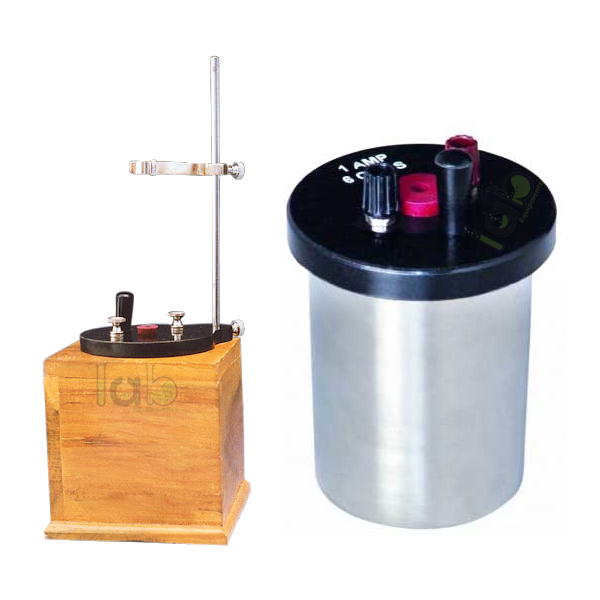
This copper calorimeter is a double-walled vessel for heat measurements by the method of mixtures. A polished copper inner vessel sits inside an insulated outer vessel, and a non-conductive lid has openings for a thermometer and the wire loop stirrer. It serves for specific heat and for latent heat of fusion and of vaporisation.
Specifications of the copper calorimeter
| Component | Specification |
|---|---|
| Inner vessel | Polished copper |
| Construction | Double-walled: copper inner vessel inside an outer insulated vessel |
| Lid | Non-conductive, heat-resistant (wooden or bakelite), with two openings for a thermometer and the stirrer |
| Stirrer | Wire loop stirrer |
| Supplied with | Instructional guide for specific heat experiments |
| Vessel size | Available from [email protected] |
| House code | SCL-H-11208 |
| Manufacturer | Lab Exports, Delhi |
Latent heat and cooling practicals in the copper calorimeter
In a method-of-mixtures practical, the heat given out by one part of the mixture equals the heat taken in by the rest, including the copper vessel and stirrer. Copper has a low, well-known specific heat capacity of about 0.39 J per g per °C, so the share taken by the vessel is small and easy to allow for.
- Latent heat of fusion of ice. Weigh the inner vessel with its stirrer on a Physical Balance, then again with warm water at temperature T1. Add small pieces of dried ice, stir, note the lowest steady temperature T, and weigh again to find the mass m of ice melted. Then mL + mcwT = (Mcw + Mccc)(T1 - T). Here L is the latent heat and cw the specific heat of water. M is the mass of warm water, and Mc and cc are the mass and specific heat of the vessel with stirrer. T1 and T are in °C.
- Latent heat of vaporisation. Pass dry steam into cold water in the calorimeter until the temperature has risen by a few degrees. The gain in mass gives the mass of steam condensed. That steam gives up its latent heat and then cools to the final temperature of the mixture.
- Cooling curve. Fill the inner vessel with hot water, close the lid and read the thermometer at equal intervals timed with an Analog Stop Clock. Plot temperature against time: the curve falls fastest while the water is hottest. Repeat without the outer vessel to see how much the double wall slows the cooling.
Frequently Asked Questions
Is a thermometer supplied with the copper calorimeter?
No, a thermometer is not in the parts list, which is usual for calorimeters. The set has the copper inner vessel, the outer insulated vessel, a heat-resistant lid with two port openings, the wire loop stirrer and an instructional guide. Use a laboratory thermometer that fits the lid opening.
What reduces heat loss between the two walls of the calorimeter?
The outer insulated vessel and the gap between the walls cut heat exchange with the room, and the non-conductive lid closes the top. The polished copper surface also gives out and takes in less radiant heat. Together they keep the mixture close to a closed system.
Why should the ice be dried before it goes into the calorimeter?
Water clinging to the ice has already melted, so it takes in no latent heat, yet its mass is counted as melted ice. That makes the calculated latent heat of fusion too low. Blot the pieces dry just before adding them.
Why start with water a few degrees above room temperature?
So that heat gained from the room and heat lost to it roughly cancel. Let the mixture start a little above room temperature and end about as far below it. The heat lost in the first part of the run is then made up by heat gained in the second part.
What is the water equivalent of a calorimeter?
It is the mass of water that would take in the same heat as the calorimeter for the same rise in temperature. It equals the mass of the vessel and stirrer times their specific heat, divided by the specific heat of water. The vessel can then be treated as extra water in the heat balance.
Apparatus used with the calorimeter
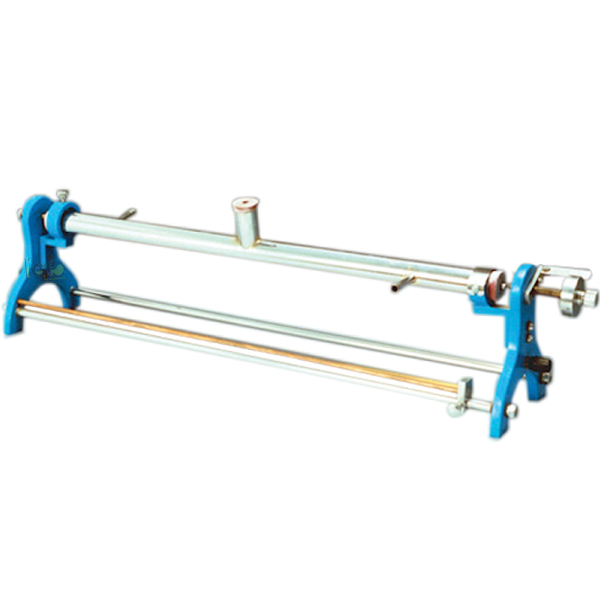
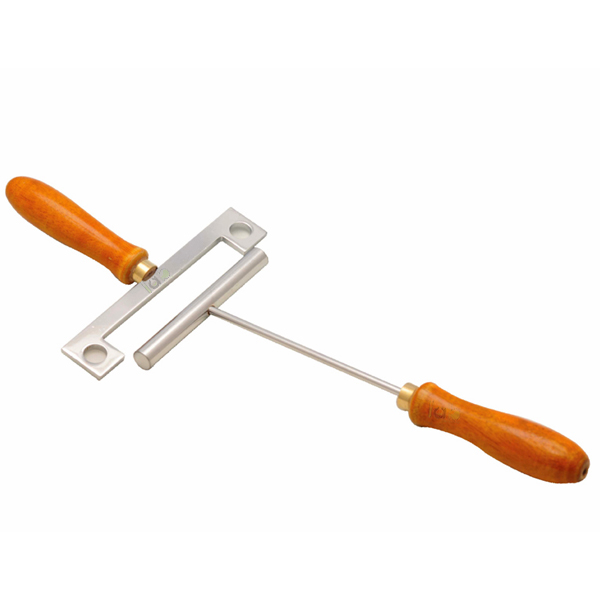
More apparatus is in the Heat section of the Physics Lab range.
To enquire, email [email protected] with the house code SCL-H-11208 and the quantity, or use the Add To Cart button on this page.
Last updated: 24 November 2026