Leclanche Cell Substitute

Product Code : SCL-EAE-11341
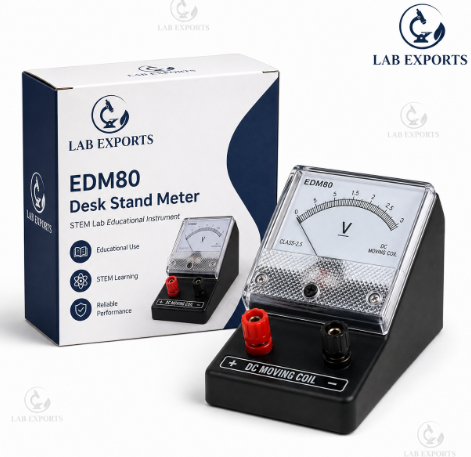
This cell substitute is a low-voltage DC source that stands in for a wet Leclanche cell in physics practicals. There is no zinc rod to clean and no ammonium chloride electrolyte to make up before class. It serves as a cell in emf comparison with a potentiometer, in polarity work and in small low-voltage circuits.
Specifications of the Leclanche cell substitute
| Component | Specification |
|---|---|
| Product type | Educational low-voltage DC cell substitute |
| Replaces | Conventional wet Leclanche cell in compatible experiments |
| Typical experiments | Emf comparison with a potentiometer and low-voltage DC circuits |
| Output voltage and power arrangement | Confirmed with each quotation |
| House code | SCL-EAE-11341 |
| Manufacturer | Lab Exports, Delhi |
Class tasks with the cell substitute
Keep the external circuit open while connecting, and find the positive and negative outputs first. Disconnect the substitute when the experiment is finished.
- Checking the output before use. Read the open-circuit output on the DC volts range of a digital multimeter. Note the value and check that it suits the experiment before the substitute goes into a circuit.
- Polarity and current direction. Connect the substitute to a galvanometer through a high resistance and a reversing key. Each time the key is switched over, the deflection swaps sides, because the current through the galvanometer has reversed.
- Second cell in an emf comparison. On the Potentiometer with Jockey Pencil, balance the substitute and a Daniell cell substitute in turn on the same wire. The ratio of their balancing lengths gives the ratio of their emfs.
Documentation and supply
Most Lab Exports products carry a one-year manufacturer warranty.
Lab Exports manufactures the Leclanche Cell Substitute at its works in Laxmi Nagar, Delhi, and supplies it to schools, colleges and universities in India and 60+ countries, handling the export documents for each shipment. More about the company is on the About Lab Exports page.
Frequently Asked Questions
Which electrolyte is used in a Leclanche cell?
A solution of ammonium chloride. The zinc rod is the negative terminal and the carbon rod the positive. The solution has to be made up and the electrodes cleaned for use. That preparation is the work this substitute removes.
Is the Leclanche cell the same as a dry cell?
Not quite. The ordinary dry cell grew out of the Leclanche cell and uses the same zinc, carbon and manganese dioxide chemistry. In the dry cell, however, the ammonium chloride is a moist paste, not a liquid. This substitute takes the place of the wet form.
What is the advantage of using a dry cell over a wet voltaic cell?
A sealed source has no liquid to spill or renew and can be stored ready to use. A wet cell needs fresh electrolyte and cleaned electrodes, and it polarises during use. The substitute shares those handling advantages, but confirm its output rating for each experiment.
Apparatus for cell and emf practicals
More apparatus is in the Electrical and Electronics section of the Physics Lab range.
To enquire, email [email protected] with the house code SCL-EAE-11341 and the quantity, or use the Add To Cart button on this page. Tender buyers can also see the Tenders and OEM page.
Last updated: 23 November 2026