Electrode Carbon Rod
Product Code : SCL-EAE-11177
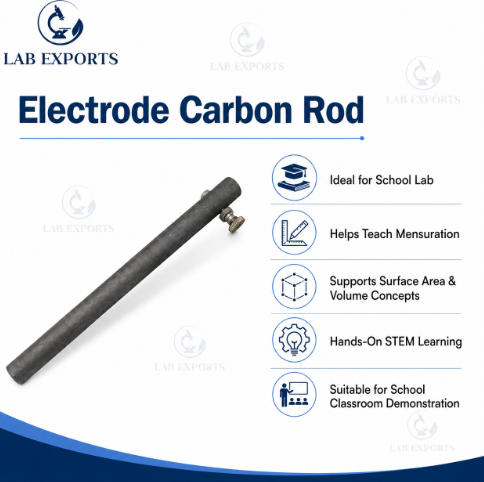
This high-purity graphite rod is used as an inert anode or cathode in school and college electrochemistry. It carries current into or out of the electrolyte without taking part in the reaction, so the products come from the electrolyte alone. Its electrical resistance is low and uniform along the rod. Each rod is 5 mm in diameter and 100 mm long, with flat ends.
Specifications of the electrode carbon rod
| Component | Specification |
|---|---|
| Material | High-purity graphite carbon |
| Size | 5 mm diameter, 100 mm long, flat ends |
| Electrical resistance | Low and uniform along the rod |
| Function | Inert anode or cathode conductor in low-voltage DC experiments |
| Fits | Rubber stoppers, electrode holders and voltameter set-ups, with a bore that matches the 5 mm rod |
| Clip and holder | Separate fittings, not part of the rod |
| Supplied with | Handling and safety instruction sheet |
| House code | SCL-EAE-11177 |
| Manufacturer | Lab Exports, Delhi |
Electrolysis practicals with the carbon rod
Many metal electrodes dissolve or add metal ions to the solution. Graphite conducts and resists common classroom acids, bases and salt solutions, which keeps the chemistry clear for students.
- Electrolysis of water. Hold two rods in acidified water with a Universal Electrode Holder and connect them to the low-voltage DC output of a Battery Eliminator. Hydrogen collects over the cathode and oxygen over the anode.
- Electrolysis of copper sulphate solution. With carbon rods as both electrodes, copper coats the cathode. Join the leads to the rods with an Electrode Connector or insulated crocodile clips.
- Simple cells. Carbon also acts as the positive electrode in some cells, as in the Leclanche cell.
Fitting and care of the rod
- Fit the rod through a rubber stopper, or into the electrode holder of the cell, with a bore that matches its 5 mm diameter.
- Attach an insulated crocodile-clip lead from the low-voltage DC supply to the exposed end.
- Lower the rod into the electrolyte, keeping the clip clear of the liquid. Set the length below the stopper or holder to suit the depth of the vessel.
- After use, rinse the rod in water and dry it before storing.
Frequently Asked Questions
What is the difference between a carbon electrode and a graphite electrode?
Both are made of carbon, but a graphite electrode has been heated to a much higher temperature so that its carbon turns into graphite. That gives it a lower electrical resistance and better resistance to attack. This rod is made of high-purity graphite carbon.
Is graphite pure carbon?
Not entirely. Graphite is a form of carbon, but natural and manufactured graphite always holds a small amount of ash and other impurities. How much depends on the grade, and this rod uses a high-purity grade.
What types of electrode are used in electrolysis?
There are two kinds, inert and active. Inert electrodes, such as graphite or platinum, only carry the current, so the products come from the electrolyte. Active electrodes, such as copper in copper refining or electroplating, take part in the reaction and dissolve or grow.
Why are graphite electrodes used in electrolysis?
Graphite conducts electricity through its free electrons, has a very high melting point and does not react with most classroom electrolytes. It carries the current without dissolving or adding metal ions, so the products at each electrode come from the electrolyte alone.
What happens to carbon electrodes during electrolysis?
The cathode usually stays unchanged, apart from any metal plated on it. At the anode, oxygen formed in many electrolytes slowly attacks the carbon, so the rod wears and its surface can crumble over long use. Rinse and dry the rod after each practical and replace it when worn.
Other apparatus for electrolysis practicals
More apparatus is in the Electrical and Electronics section of the Physics Lab range.
To enquire, email [email protected] with the house code SCL-EAE-11177 and the quantity, or use the Add To Cart button on this page. Tender buyers can also see the Tenders and OEM page.
Last updated: 23 November 2026