Fruit Clock
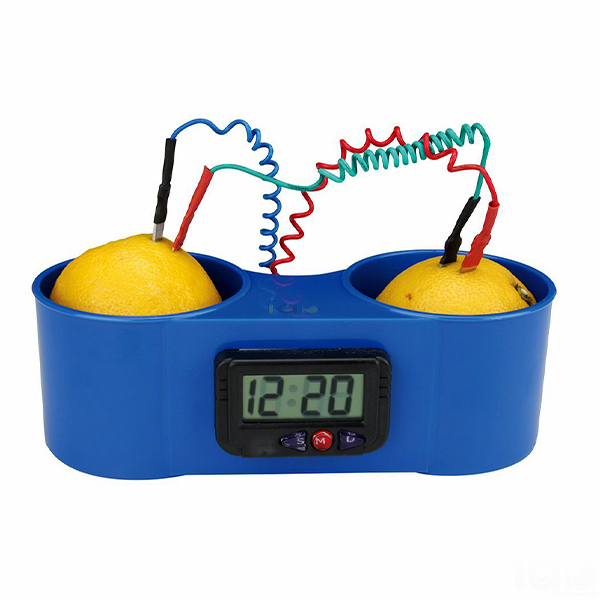
Product Code : EL-E-10981
Quick answer: The Fruit Clock is a kit in which the juice inside two lemons serves as the electrolyte for two cells connected in series, producing enough voltage to run a clock through an oxidation-reduction reaction. It shows students that chemical energy can be turned into electrical energy. Lab Exports manufactures it in Delhi for schools, colleges and universities.
Specifications
| Item | Detail |
|---|---|
| Electrolyte | Lemon juice; 2 lemons required |
| Circuit | 2 lemon cells connected in series |
| Output | Sufficient voltage to power the clock |
| Maintenance | Electrodes sanded clean between attempts |
How the fruit clock experiment is done
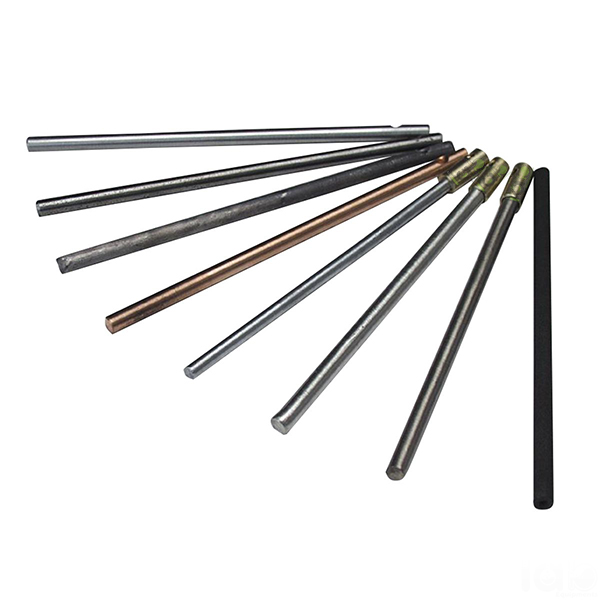
Each lemon becomes a simple cell. Two different metal electrodes are pushed into the fruit, and the acidic juice acts as the electrolyte. The more reactive metal is oxidised, giving up electrons that flow through the external circuit, while at the other electrode hydrogen ions from the juice are reduced. This redox reaction turns chemical energy into electrical energy.
One lemon cell gives only a small voltage, typically below one volt, so two are joined in series, the positive of one to the negative of the next, to add their voltages to a level that runs the clock.
- Roll the lemons on the bench to break up the pulp and free the juice.
- Push one pair of electrodes into each lemon, keeping the two electrodes apart.
- Connect the two lemon cells in series and then to the clock terminals.
- Watch the clock start; if it does not, check the connections and the polarity.
- After each attempt, sand the electrodes clean before using them again.
Key features
- Runs a clock from two lemons wired in series
- Shows a redox reaction producing electricity
- Uses an everyday electrolyte, lemon juice
- Electrodes are reused after sanding clean
- Suits introductory electrochemistry lessons
Documentation and supply
Most Lab Exports products carry a one-year manufacturer warranty.
Lab Exports manufactures the fruit clock kit at its works in Laxmi Nagar, Delhi, and supplies it to schools, colleges and universities in India and 60+ countries, handling the export documents for each shipment. More about the company is on the About Lab Exports page.
Related Electrolysis products
- Salt Bridge (EL-E-10980)
- Electrolysis Cells (EL-E-10982)
- Simple Cell, Student Kit (EL-E-10979)
- Electrode Connector (EL-E-10983)
- Student Gas Voltameter (EL-E-10978)
- Universal Electrode Holder (EL-E-10984)
The full range is in the Electrolysis section of the Chemistry Lab range.
Frequently asked questions
How many lemons does the fruit clock need?
Two lemons, used as two cells connected in series.
Why must the electrodes be sanded between attempts?
Corrosion products build up on the metal surfaces during the reaction; sanding the electrodes clean gives fresh metal for the next run.
What is the price of the fruit clock kit?
Prices are not published on the website. Add the fruit clock kit to the Enquiry Cart with the Add To Cart button on this page, or email [email protected] with the house code EL-E-10981 and the quantity, to receive a quotation.
Does Lab Exports manufacture the fruit clock kit?
Yes. Lab Exports manufactures the fruit clock kit at its works at 11/315, Lalita Park, Laxmi Nagar, Delhi 110092, under house code EL-E-10981.
Request a quote
Email [email protected] with the house code EL-E-10981 and the quantity, or add the fruit clock kit to the Enquiry Cart with the Add To Cart button on this page. Tender buyers can also see the Tenders and OEM page.