Chromatography TLC Plates, 'Polygram' Pre-Coated

Product Code : EL-C-10970
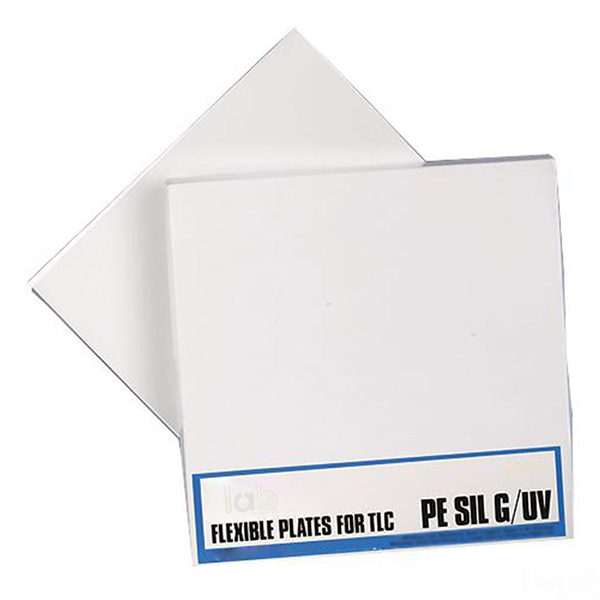
These Polygram pre-coated TLC plates are flexible sheets for thin layer chromatography. A 0.20 mm silica gel layer with a fluorescent indicator coats a 0.2 mm polyester sheet that resists common TLC solvents. Compounds that absorb UV light show as dark spots under a UV lamp. The sheets can be rolled or cut to fit a tank.
Specifications of the Polygram TLC plates
| Component | Specification |
|---|---|
| Brand | Polygram |
| Coating | Silica gel, 0.20 mm layer |
| Indicator | Fluorescent indicator in the layer |
| Carrier sheet | Polyester, 0.2 mm thick, resistant to the organic solvents commonly used in TLC |
| Handling | Can be rolled to fit chromatography cylinders, or cut with scissors into smaller plates |
| House code | EL-C-10970 |
| Supplier | Lab Exports, Delhi. Lab Exports supplies the Polygram TLC plates as a reseller; they are not manufactured by Lab Exports. |
Practical work with these TLC sheets
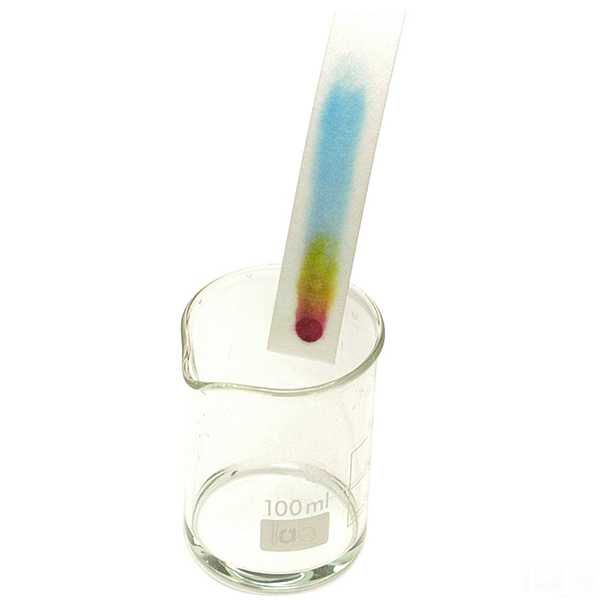
The silica gel is the polar stationary phase. A solvent drawn up the sheet by capillary action is the mobile phase. Components held less strongly by the silica travel further, so a mixture splits into separate spots.
- Separating the dyes in an ink. Spot chromatography separation ink on the start line and develop the sheet. The coloured dyes can be seen without a UV lamp, so this run suits a first practical.
- Checking purity or reaction progress. Spot the starting material, the product and a mixture of the two side by side. A pure product gives a single spot, and a finished reaction shows no starting-material spot.
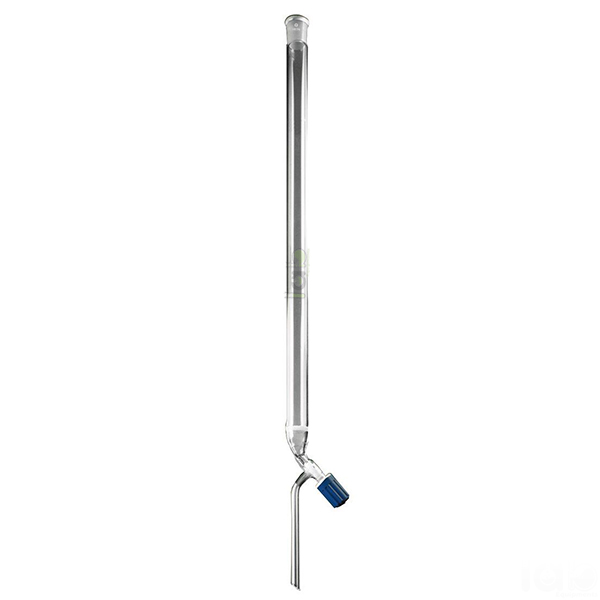
- Choosing a solvent for column work. Try solvent mixtures on narrow cut strips until the wanted compound separates well. Then run the same mixture through a Pyrex chromatography column and check each fraction on a TLC strip.
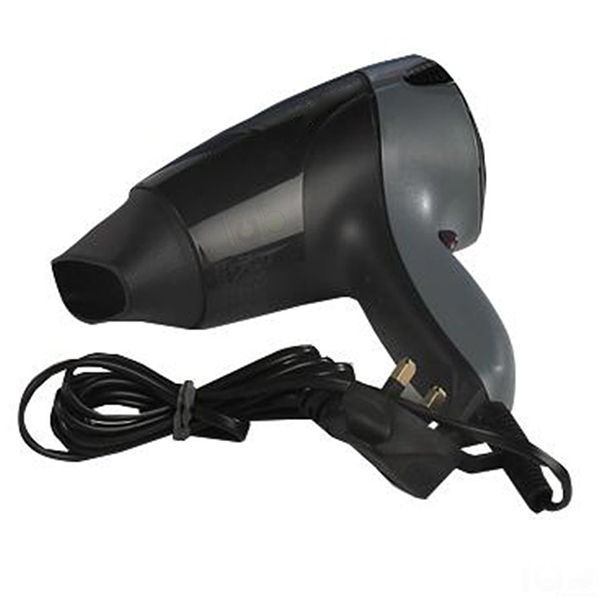
- Drying before viewing. Dry the developed sheet with gentle warm air from a hot air blower, so solvent does not blur the spots under the lamp.
Running a TLC sheet step by step
- Cut or roll the sheet to fit the tank or chromatography cylinder.
- Draw a light pencil start line and put small spots of each sample on it.
- Develop the sheet in a covered tank, with the solvent level below the start line.
- Mark the solvent front, dry the sheet and view it under a UV lamp. Ring the dark spots in pencil.
- Measure the distances and work out the Rf value of each spot.
Frequently Asked Questions
Why is the start line drawn in pencil and not ink?
Pencil graphite does not dissolve in the solvent, so the line stays where it is. Ink is a mixture of dyes that would dissolve and run up the sheet as extra spots. Press lightly so the silica layer is not scraped off.
Why do spots look dark under the UV lamp?
The fluorescent indicator in the layer glows when UV light falls on it. A compound that absorbs UV light blocks that glow, so it shows as a dark patch on a bright background. Ring each spot in pencil, because it disappears when the lamp is off. Never look straight into the lamp.
How is the Rf value calculated?
Measure from the start line to the centre of the spot, and from the start line to the solvent front. Rf is the first distance divided by the second, so it lies between 0 and 1. Rf values can be compared only on the same layer with the same solvent.
Why must the solvent be below the start line, and why is the tank covered?
If the solvent covers the start line, the samples wash off into the solvent pool instead of moving up the sheet. A lid keeps the tank full of solvent vapour, so the solvent does not evaporate from the sheet as it rises and the front stays level.
Can the Polygram sheets be cut, rolled or heated?
They cut with scissors into strips of the size needed, and they roll to fit a chromatography cylinder. Drying with gentle warm air is fine. Avoid strong heating, such as charring at high temperature, because a plastic backing can soften.
Other items for chromatography practicals
More items are in the Chromatography section of the Chemistry Lab range.
To enquire, email [email protected] with the house code EL-C-10970 and the quantity, or use the Add To Cart button on this page. Tender buyers can also see the Tenders and OEM page.
Last updated: 19 November 2026